Mullein And Respiratory Health: What The Research Shows
Mullein (Verbascum thapsus) has centuries of traditional use for respiratory comfort, generally associated with soothing irritated throat and airway tissue.
It is arguably the ingredient with the clearest traditional precedent in a formula like RespiClear's, though modern clinical research remains limited in scale.
A long traditional history
Mullein has been used in traditional herbal practice across many cultures for generations, generally associated with soothing coughs and irritated respiratory tissue. This traditional use is well documented, and research reviewing Verbascum thapsus is indexed on PubMed.
What is thought to be behind its traditional use
Mullein leaves contain mucilage, a gel-like plant compound, along with saponins and flavonoids. Mucilage is generally thought to have a soothing, coating effect on irritated mucous membranes, which is the most commonly cited mechanism behind its traditional use for throat and airway comfort.
Being honest about the modern evidence base
What it does not do
Mullein is not a treatment for asthma, COPD, pneumonia, bronchitis or any diagnosed respiratory condition. Traditional use for general throat and airway comfort is a different claim than treating a specific diagnosed disease, and we are careful to keep that distinction clear.
Applying this to RespiClear
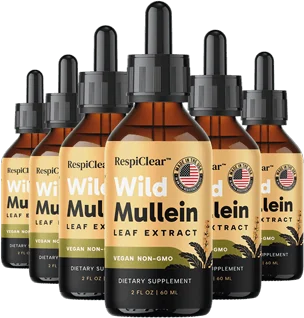
Wild Mullein Leaf Extract is the core ingredient in RespiClear's five-ingredient formula, and it is arguably the single ingredient here with the clearest traditional precedent for respiratory comfort. As with the rest of the formula, the exact amount per serving is not disclosed, which limits how directly it can be compared to traditional preparation strengths.